Forget Sultanahmet: The Real Istanbul Neighborhoods Where Americans Are Putting Down Roots
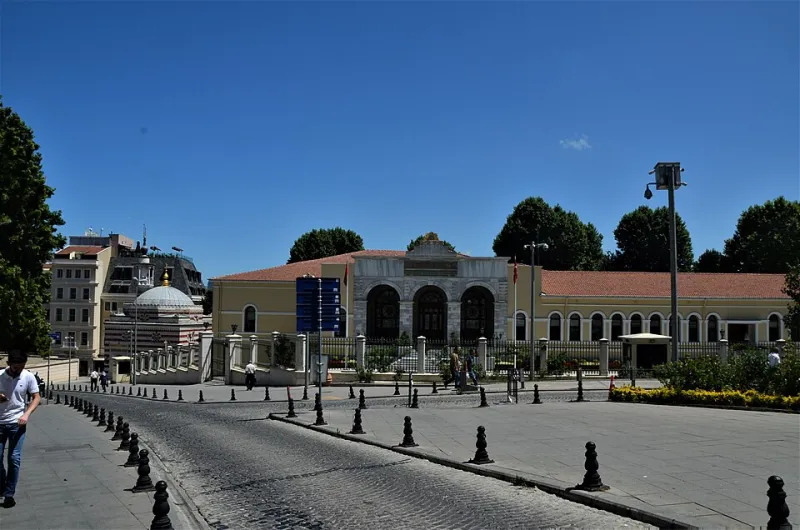
Photo: Raicem, CC BY-SA 4.0, via Wikimedia Commons
Every first-time visitor to Istanbul ends up in Sultanahmet. It's practically mandatory—the Blue Mosque, Hagia Sophia, the Grand Bazaar. It's magnificent. It's also, if we're being straight with you, not where anyone actually lives. The neighborhoods that make Istanbul one of the world's most livable cities are the ones that don't make it onto the cover of travel magazines. They're the ones where your neighbor knows your coffee order, where the Saturday market smells like fresh simit and dried figs, and where you start to feel—genuinely—like you belong somewhere.
We asked long-term American residents to tell us about the districts they chose and why they stayed. Here's what they said.
Kadıköy: The Expat's Favorite Side of the City
Sit down for this one if you haven't heard it yet: Istanbul is divided by water. The Bosphorus splits the city into a European side and an Asian side, and while most tourists stay firmly on the European shore, a significant and growing chunk of the expat community has crossed over—and they're not looking back.
Kadıköy, on the Asian side, is the neighborhood that converts skeptics. It has the energy of a college town crossed with a serious food scene, walkable streets packed with independent bookstores, vinyl shops, and wine bars, and a farmers' market on Sundays that could make a grown person emotional.
Housing costs: Expect to pay roughly $600–$1,000/month for a furnished one-bedroom in a decent building, though prices have climbed with inflation and the neighborhood's growing popularity. The further you get from the main Moda strip, the more your money goes.
Dining picks: Çiya Sofrası for regional Turkish food that will ruin you for other restaurants. The Moda neighborhood within Kadıköy has excellent café culture—try Fazıl Bey for Turkish coffee done right.
Co-working: Kolektif House has a Kadıköy location that's popular with remote workers and freelancers. The vibe is professional but not stuffy.
Ashley Monroe, a UX writer from Austin who's been in Kadıköy for two and a half years, chose the neighborhood for practical reasons that became personal ones. "The ferry commute to the European side sounds romantic and it actually is. But more than that—Kadıköy just felt like a real neighborhood. My dry cleaner knows my name. My produce guy saves me the good tomatoes. You don't get that in a tourist area."
Beşiktaş: Central, Chaotic, and Completely Addictive
On the European side, Beşiktaş sits at the intersection of Istanbul's professional and creative worlds. It's home to universities, a beloved football club (the black-and-white scarves are everywhere on match days), and some of the city's most interesting street-level culture. It's also one of the more centrally located neighborhoods, making it a practical choice for people who need to move around the city.
The area around Akaretler—a row of 19th-century townhouses converted into boutique shops and restaurants—has a distinctly cosmopolitan feel without being sanitized. Nearby Ortaköy, technically its own neighborhood but often considered part of the Beşiktaş district, sits right on the Bosphorus and offers one of the most beautiful urban waterfront stretches anywhere in the world.
Housing costs: Beşiktaş runs slightly higher than Kadıköy—figure $800–$1,400/month for a one-bedroom, depending on proximity to the water and building quality. Older buildings in the backstreets offer more space for the money.
Dining picks: Beşiktaş market for breakfast ingredients, Karaköy Güllüoğlu (technically in neighboring Karaköy, but close enough) for the best baklava of your life, and the fish restaurants along the Ortaköy waterfront for special occasions.
Co-working: Workinton has a well-regarded location in the broader Beşiktaş area. The neighborhood also has enough cafés with fast WiFi that many remote workers never bother with a formal co-working membership.
David Kim, a financial analyst from Seattle, has lived in Beşiktaş for four years and has no plans to leave. "I can walk to three different ferry stops. I can be in Karaköy in ten minutes, in Eminönü in twenty. For someone who needs to meet clients across the city, it's the most strategically located neighborhood I've ever lived in. And then I walk home along the Bosphorus and forget about strategy entirely."
Balat: The Neighborhood That Time (Almost) Forgot
Balat is the wildcard on this list—and possibly the most talked-about neighborhood in Istanbul right now. Tucked along the Golden Horn on the European side, it's one of the city's oldest districts, with a layered history that includes centuries of Jewish, Greek, and Armenian communities. The streets are narrow and hilly, the buildings are painted in faded jewel tones, and the pace of life is slower than almost anywhere else in the city.
It's also gentrifying, which means the window for experiencing it before it transforms completely may be limited. For now, though, it occupies a rare sweet spot: authentic enough to feel genuinely historical, developed enough to have excellent coffee shops and weekend brunch spots.
Housing costs: Still among the more affordable options in the city—$500–$900/month for a one-bedroom is realistic, though the older building stock means you should inspect carefully and ask about heating systems.
Dining picks: Fener Balat Kahvaltı for weekend breakfast spreads that go on forever. Walk the side streets and you'll find small meyhanes (traditional Turkish taverns) that haven't changed their menus in decades.
Co-working: Balat doesn't have major co-working facilities yet, but the café culture fills the gap. Several spots along the main drag have become unofficial remote-work hubs.
Sarah Chen, a photographer from Brooklyn who moved to Balat eighteen months ago, chose it for reasons that are harder to quantify. "It doesn't feel like any other neighborhood I've ever lived in. There's this texture to it—the light on the old walls, the cats everywhere, the sound of the call to prayer bouncing between the buildings. I came for a month and I'm still here."
A Few Other Neighborhoods Worth Your Radar
Cihangir: Bohemian, hilly, slightly expensive, and beloved by artists and writers. Think Brooklyn's Park Slope but with better views.
Moda (within Kadıköy): The quieter, more residential pocket of Kadıköy's broader district. Great for families or anyone who wants café culture without the weekend crowds.
Nişantaşı: Istanbul's answer to the Upper East Side—upscale, fashion-forward, and home to a significant number of professionals. Higher rents, but excellent infrastructure.
How to Choose
The honest answer is that the right neighborhood depends on questions only you can answer. Do you need to commute to a physical office? The Asian side's ferry connections are excellent, but if your office is in Levent, you'll want to think about commute time. Do you have kids? School proximity matters. Are you a walker or a commuter? Istanbul rewards walkers, but some neighborhoods are dramatically hillier than others (Balat and Cihangir, we're looking at you).
What we'd suggest: spend at least a weekend in any neighborhood you're seriously considering. Eat breakfast at a local spot. Walk around at 10pm. Take the ferry if there is one. The city reveals itself slowly, and so does the right neighborhood.