So You Want to Stay? A No-Nonsense American's Roadmap Through Turkish Red Tape

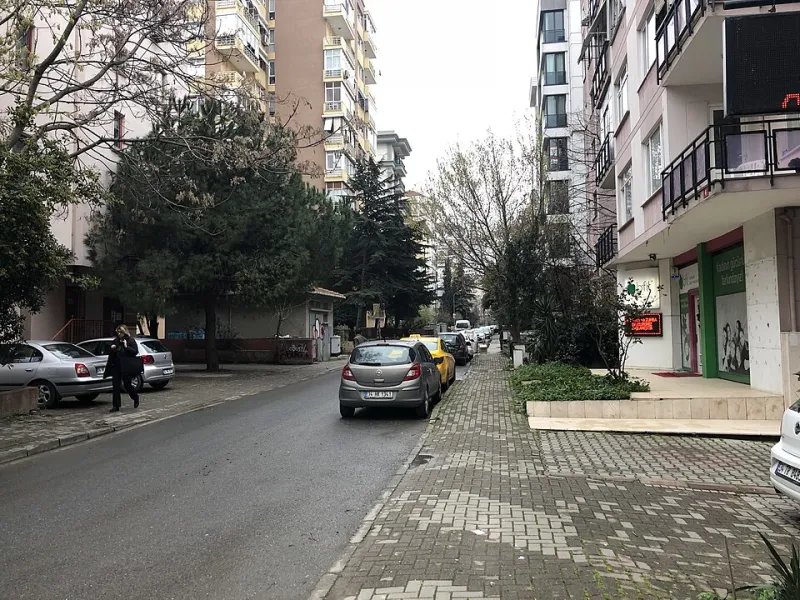
Photo: CeeGee, CC BY-SA 4.0, via Wikimedia Commons
Let's be honest: nobody moves to Istanbul for the paperwork. You came for the Bosphorus views, the food, the history layered so thick you can practically taste it in the air. But at some point—usually around week three, when your tourist visa is ticking down—reality taps you on the shoulder and says, time to figure out how this country actually works.
The good news? Thousands of Americans have navigated Turkish bureaucracy before you and lived to tell the tale. The better news? We tracked a bunch of them down so you don't have to learn everything the hard way.
Step One: The Ikamet — Your Golden Ticket to Legal Residency
The ikamet tezkeresi, or residence permit, is the cornerstone of your legal life in Turkey. Without it, you're technically a tourist on borrowed time. With it, you can open a bank account, sign a lease properly, and stop doing that slightly anxious math every time you cross a border.
There are several types of ikamet, but most Americans start with a short-term residence permit, which is renewable and covers reasons like tourism, property ownership, or simply wanting to live here. If you're working for a Turkish employer, you'll be looking at a work permit instead—a separate, employer-sponsored process.
How to apply:
- Book an appointment through the official e-ikamet system at e-ikamet.goc.gov.tr (yes, the website is occasionally temperamental—try early mornings).
- Gather your documents: valid passport, completed application form, four biometric photos, proof of address (a notarized rental contract works), proof of financial means (bank statements showing roughly $500/month is a common benchmark), and health insurance valid in Turkey.
- Pay the card fee and document fee—amounts change annually, so check the current rates on the Directorate General of Migration Management website.
- Attend your appointment at the local migration office (Göç İdaresi Müdürlüğü). Istanbul has several offices; which one you're assigned to depends on your district of residence.
Jennifer Hartley, a graphic designer from Portland who's been living in Kadıköy for four years, remembers her first application vividly. "I showed up with what I thought was every document known to mankind. They asked for a notarized translation of my bank statement that I didn't have. I had to reschedule." Her advice: bring originals AND copies of everything, translated where required. It sounds excessive until the moment it saves you.
Permits are typically issued for one or two years initially. Renewals get smoother once you know the drill.
Taxes: The Part Americans Dread Most (For Good Reason)
Here's the uncomfortable truth that no Instagram post about Istanbul sunsets mentions: the United States taxes its citizens on worldwide income, regardless of where you live. That means even if you're sipping Turkish coffee on your Bosphorus-view terrace, you still owe Uncle Sam a conversation every April.
The good news is that several mechanisms exist to prevent you from being taxed twice on the same income.
The Foreign Earned Income Exclusion (FEIE) — Filed via IRS Form 2555, this lets qualifying expats exclude a significant chunk of foreign-earned income from US taxation (the 2024 limit is $126,500). To qualify, you generally need to meet either the bona fide residence test (established resident of a foreign country) or the physical presence test (330 days outside the US in a 12-month period).
The Foreign Tax Credit — If you're paying Turkish income tax, you may be able to offset your US tax liability dollar-for-dollar using Form 1116. Turkey and the US don't currently have a comprehensive tax treaty covering income tax, so this credit becomes especially important for Americans earning locally.
Mark Deluca, a software consultant from Chicago who's been based in Beşiktaş for three years, works with both a Turkish accountant and a US expat tax specialist. "I tried doing it myself the first year. I missed the FEIE election deadline and it cost me significantly. Now I pay two accountants and I sleep at night."
FBAR: The Reporting Requirement That Sneaks Up on Everyone
If you have foreign bank accounts—and living in Istanbul, you almost certainly will—you need to know about FBAR (FinCEN Form 114). If the aggregate value of all your foreign financial accounts exceeds $10,000 at any point during the calendar year, you're required to file. The deadline is April 15, with an automatic extension to October 15.
This isn't a tax. It's a reporting requirement. But the penalties for non-compliance are severe—up to $10,000 per violation for non-willful failures, and far worse for willful ones. File it through the BSA E-Filing System at bsaefiling.fincen.treas.gov.
Also worth knowing: FATCA (Foreign Account Tax Compliance Act) requires many foreign financial institutions to report US account holders to the IRS. Turkish banks are increasingly FATCA-compliant, which means the IRS may already know about your accounts. Transparency is genuinely your friend here.
Practical Government Services: Getting Things Done in Istanbul
Beyond the big-ticket items, day-to-day government interactions have their own learning curve.
- e-Devlet (e-Government Portal): Once you have a Turkish ID number (yabancı kimlik numarası, issued with your ikamet), you can access a surprisingly robust online government portal for everything from utility registrations to official document requests.
- Notary Services (Noter): Turkey relies heavily on notarized documents. Noters are everywhere and reasonably priced. For US documents, the American Consulate General in Istanbul offers notarial services by appointment.
- Turkish Tax Number (Vergi Numarası): You'll need this before you can open a bank account or sign certain contracts. It's obtained quickly at any local tax office (Vergi Dairesi) with just your passport.
Your Pre-Arrival Checklist
- Research which ikamet type applies to your situation
- Secure health insurance valid in Turkey before arrival
- Get rental contract notarized in Turkish
- Open a Turkish bank account and obtain your vergi numarası
- Register with the nearest US Consulate (Smart Traveler Enrollment Program)
- Hire a US expat tax specialist familiar with FEIE and FBAR
- Set calendar reminders for April 15 (FBAR, US taxes) and your ikamet renewal date
- Join expat Facebook groups and forums—real-time advice from people in the same situation is invaluable
The bureaucratic maze of expat life in Istanbul is real, but it's navigable. The people who struggle most are usually those who underestimate it or try to wing it solo. The ones who thrive? They build a small team—a trusted local lawyer or immigration consultant, an expat-savvy US accountant, and a community of fellow Americans who've already figured out which documents to bring in triplicate.