Çay o'Clock: Confessions of a Recovering Tea Refuser
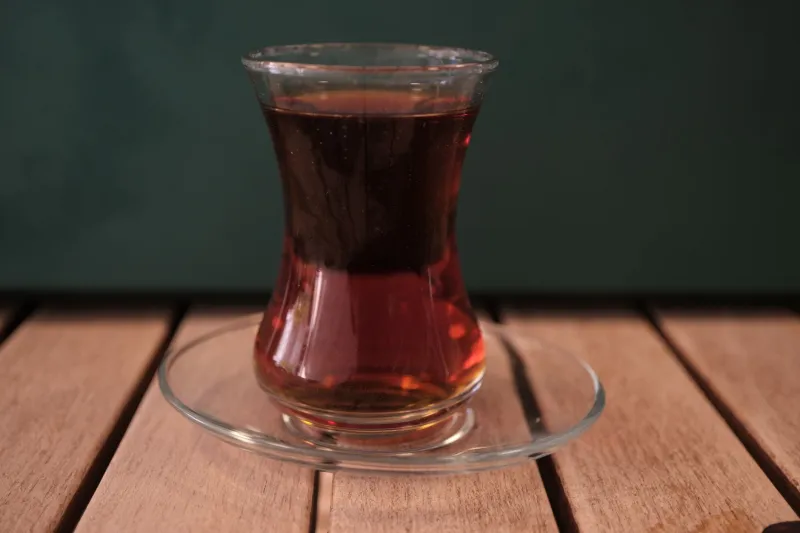
I moved to Istanbul as a proud, committed coffee person. I had opinions about pour-over ratios. I owned a burr grinder. Within six weeks, I was drinking five glasses of çay a day and couldn't tell you when the conversion happened. Nobody converted me. That's the thing about Turkish tea — you're never recruited, you just wake up one afternoon holding a tulip-shaped glass and realize resistance was never really on the table.
The Anatomy of a Glass
Turkish tea is brewed in a stacked double teapot called a çaydanlık: a big pot of boiling water below, a small pot of concentrated tea above. You pour from both, adjusting the strength — "koyu" (dark) or "açık" (light) — to taste. It's served in those slim, curved glasses that look like tulip buds, always with tiny spoons, often with two sugar cubes stacked on the saucer like a tiny monument.
The flavor surprises Americans. It's not your grandmother's iced sweet tea and it's not delicate green tea. It's a black tea from the Black Sea coast around Rize — earthy, a little tannic, drunk hot in every season including August, which initially felt like a medical error and now feels correct.
Where the Tea Gets You
The workplace. In an Istanbul office, tea isn't a break from work; it's infrastructure. The office tea runner (çaycı) makes rounds with a tray of glasses on the hour, and your desk has a designated glass that is somehow always full. Refusing is technically possible. Socially, it's like declining a colleague's handshake — nobody stops you, but everyone notices.
The shopkeeper. Try on a jacket in a Beyoğlu boutique or linger over a carpet and you'll be invited to sit and drink tea. First-timers panic: "Is this an obligation to buy?" Mostly, no. Tea in a shop is hospitality, not a contract. You can drink, chat, and leave. Regulars say the tea is how shopkeepers decide what kind of person you are before any haggling starts — and they're usually right to.
The neighbor. When we moved into our apartment in Kadıköy, the woman across the hall brought over a tray within the hour: tea, two kinds of homemade börek, and a thirty-minute conversation conducted half in Turkish, half in gestures. That tray did more for my integration than any language app. In much of Istanbul, your first tea invitation from a neighbor is a door opening. Walk through it.
The bazaar. Haggling in the Grand Bazaar is a tea-soaked ritual. The vendor sits you down, pours, chats about where you're from ("Texas? Cowboys!"), and only then does the negotiation begin. The tea buys time, builds rapport, and — let's be honest — makes you a softer touch. Drink it. Enjoy it. Check the price against your head before agreeing to anything.
The Refusal Problem
Here's the dilemma the title promised. Çay arrives constantly — at the bank while you wait for a number to be called, at the barber, at the government office, at your kid's school. By glass number five, you're vibrating. But outright refusal reads as rejection of the person, not the drink.
The graceful outs I've learned:
- "Sağ olun, koyu değil" — thanks, and make it light. A strength adjustment is an acceptance, not a refusal.
- The half-glass. Sip slowly, leave most of it. Nobody monitors the dregs the way Americans fear.
- The pivot. "Çayı bıraktım, kahve içer miyim?" — I've cut back on tea, may I have coffee instead? It's understood, occasionally mourned, never resented.
- The honest limit. "Bugün için yeter" — that's enough for today — said with a smile works better than you'd think.
Why You Shouldn't Fight It
A wise Turkish friend put it this way: tea is how Turks say "you can relax now." Every glass is a small declaration that the person across from you matters more than the schedule. As an expat, that's the whole game. The residence permit gets you legal status; the tea gets you belonging.
Eight years in, I own a çaydanlık, I stock Rize tea from the local pazar, and I judge guests' strength preferences with the smugness of a convert. When friends visit from the States, they always ask what's in the tea that makes it taste different. Nothing, I tell them. Same plant, different country. It's just that here, someone's always offering, and eventually — mercifully — you stop saying no.